Waterjet Knowledge
How to Maintain a Waterjet Cutting Pump?
How to Maintain a Waterjet Cutting Pump?
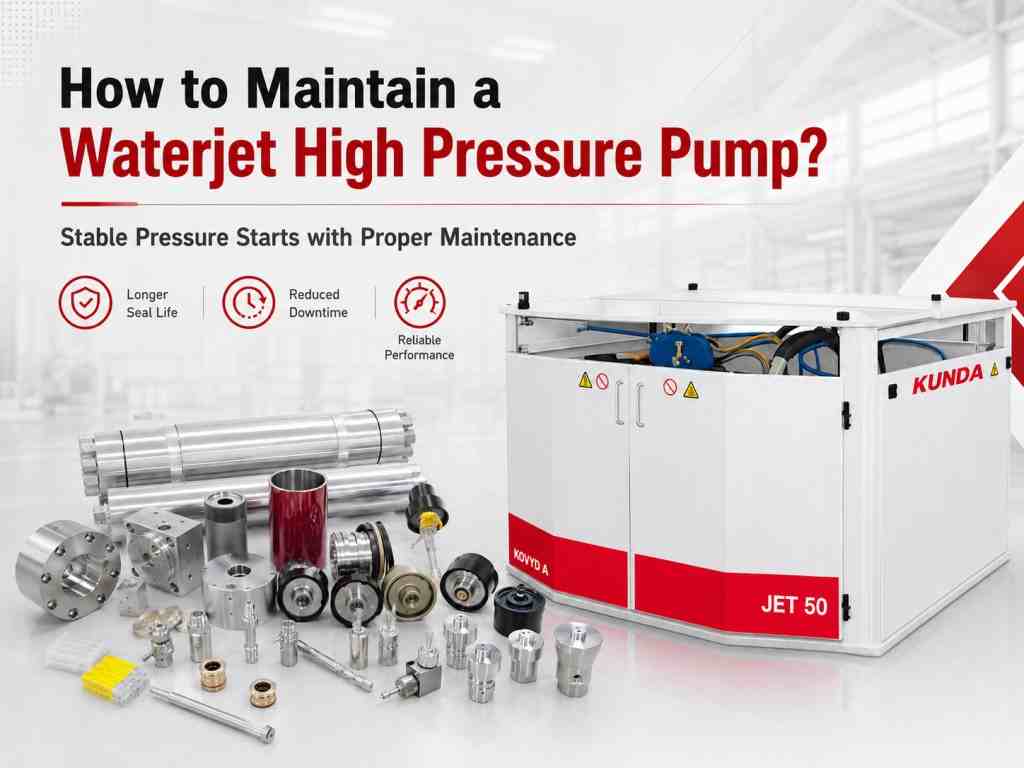
The waterjet cutting high-pressure pump is the core power system of the entire Waterjet Cutting Equipment. It is responsible for generating high-pressure water flow for cutting various materials such as metal, stone, glass, ceramics, rubber, and composite materials.
For waterjet cutting users, the stability of the high-pressure pump is crucial. If the waterjet cutting pump is not properly maintained, the equipment may experience problems such as pressure drop, pressure fluctuations, leaks, short seal life, unstable cutting quality, rapid wear of parts, and frequent machine downtime.
Maintaining a waterjet cutting high-pressure pump is not about waiting until the equipment breaks down to replace parts. A better approach is to establish a regular maintenance plan, promptly inspect key components, use appropriate spare parts, and maintain the stable operation of the entire high-pressure system.
This article will introduce the main maintenance methods for waterjet cutting high-pressure pumps and how to reduce equipment operating costs through proper maintenance.
Why is maintenance of waterjet cutting high-pressure pumps so important?
Waterjet cutting pumps operate under high pressure for extended periods. During daily operation, many components are subjected to high-pressure water impact, repeated pressure cycles, friction, temperature changes, and prolonged workloads.
Neglecting maintenance can easily allow small problems to escalate into serious malfunctions.
Inadequate waterjet cutting pump maintenance can lead to: decreased pump pressure, unstable pressure fluctuations, shortened high-pressure seal life, leaks in the high-pressure system, damage to check valve components, decreased cutting quality, increased abrasive consumption, frequent equipment alarms, and increased downtime.
1. Regularly Inspect the High-Pressure Seal
The high-pressure seal is a very common and vulnerable component in waterjet cutting pumps. Its main function is to help the pump maintain pressure and prevent high-pressure water from leaking inside the pump body.
When the high-pressure seal is worn, aged, or damaged, the waterjet cutting pump may experience pressure drops, leaks, or unstable operation.
Common high-pressure seal problems include: leaks near the pump body, the waterjet cutting pump failing to reach the target pressure, pressure drop during cutting, short seal lifespan, frequent seal replacements, and unstable cutting performance.
To maintain stable operation of the waterjet cutting pump, users should regularly inspect the high-pressure seal and replace it with the correct type of seal kit when necessary.
2. Inspect the Check Valve Fittings
The check valve fittings control the direction of water flow inside the high-pressure pump, helping the waterjet cutting pump build up pressure properly and preventing backflow.
If the check valve fittings are worn, clogged, cracked, or not sealing properly, the waterjet cutting pump may experience pressure drops or pressure fluctuations.
Key check valve components requiring inspection include: valve body, seat, core, spring, sealing ring, and related sealing components. Common symptoms of check valve malfunctions include: slow pressure build-up, Water Jet Pump failing to reach normal pressure, pressure fluctuations, abnormal pump noises, water backflow, and frequent high-pressure seal failure. Timely replacement of worn check valve components can help restore pump pressure stability and reduce equipment downtime.
3. Inspect the ceramic plunger.
The ceramic plunger works in conjunction with the high-pressure seal, and its surface condition directly affects seal life.
Scratches, cracks, wear, or contamination on the ceramic plunger surface can quickly damage a new high-pressure seal. This is why some customers frequently replace seals but still experience leaks or short seal life.
Before installing a new sealing kit, it is recommended to carefully inspect the ceramic plunger surface.
Replacement of the ceramic plunger should be considered if the following conditions are observed: obvious scratches, cracks, uneven wear, rough surface, edge damage, or severe contamination. Maintaining a smooth and clean ceramic plunger surface can effectively improve seal life and pump operational stability.
4. Monitor Pump Pressure Stability
Stable pressure is crucial for ensuring waterjet cutting quality. Frequent pump pressure fluctuations will cause instability in the waterjet jet, affecting cutting results.
Pressure instability may be caused by: high-pressure seal wear, damaged check valve components, accumulator malfunction, unstable water supply, inappropriate sapphire hole size, high-pressure pipeline leaks, or hydraulic system failure. Operators should monitor pressure changes during cutting. If pressure drops or fluctuations occur, it is not recommended to simply increase the pressure; instead, the entire high-pressure system should be checked step-by-step.
5. Maintain the Accumulator
The accumulator's function is to reduce pressure pulsations in the high-pressure system, making the Waterjet Pump output more stable, thereby improving cutting stability.
If the accumulator is not in good condition, customers may experience: significant pressure fluctuations, unstable water jet, high-pressure system vibration, poor cutting consistency, and accelerated wear of related pump components.
Users should regularly inspect the accumulator based on pump usage and maintenance cycles. If the accumulator is damaged or no longer suitable for the current system, it should be replaced promptly.
6. Maintain Stable Water Quality
Water quality has a significant impact on waterjet high-pressure pumps. Poor water quality will shorten the lifespan of high-pressure seals, check valves, ceramic plungers, sapphire orifices, and other high-pressure components.
If the water contains impurities, sediment, rust, or hard particles, it may damage internal parts of the high-pressure system.
A good water filtration system can protect the high-pressure pump and reduce component wear.
7. Replace Filters on Time
Although filters are small components, they are crucial for protecting the waterjet pump.
If the filter is clogged or not replaced for a long time, it may lead to insufficient water flow or allow impurities to enter the high-pressure pump, ultimately causing pump instability and accelerated wear of components.
Customers should regularly inspect and replace filters based on equipment usage frequency and water quality.
8. Avoid Prolonged Full-Load Operation
Although waterjet cutting high-pressure pumps are designed for high-pressure operation, prolonged full-load operation increases wear and maintenance risks.
Prolonged full-load operation may lead to: accelerated seal wear, increased hydraulic oil temperature, increased pressure load on high-pressure components, shortened component lifespan, increased downtime risk, and increased maintenance costs.
For long-term production, customers should maintain a reasonable operating margin and select appropriate cutting parameters based on material type, material thickness, pump capacity, and cutting quality requirements.
Stable operation is generally more valuable than blindly pursuing extreme pressure.
9. Inspect the Hydraulic Oil and Cooling System
The hydraulic system is crucial for booster waterjet cutting pumps. Poor hydraulic oil condition or excessively high oil temperature will affect the stability of the high-pressure pump.
Customers should regularly check: hydraulic oil level, hydraulic oil cleanliness, hydraulic oil temperature, cooling system status, hydraulic hoses, hydraulic seals, and hydraulic valves.
10. Inspect High-Pressure Lines and Connectors
High-pressure lines and connectors also require regular inspection to check for leaks, wear, damage, or loose connections.
Even small leaks can affect pressure stability and pose safety risks.
Locations to check include: high-pressure pipes, high-pressure connectors, pump outlet connections, cutting head connections, on/off valve connections, and all types of sealing connections.
If any high-pressure components are found to be damaged or leaking, they should be replaced immediately before continuing production.
11. Use the Correct Orifice and Nozzle Combination
The combination of the orifice and Mixing Tube affects pump load, pressure stability, water flow rate, abrasive efficiency, and cutting quality.
If the orifice size is too large, exceeding the pump's flow capacity, the pump may not be able to maintain the target pressure stably. If the mixing tube is severely worn, the abrasive utilization efficiency will decrease, and the cutting quality will deteriorate.
A proper combination of sapphire nozzle and nozzle can help customers: maintain stable pump pressure, reduce unnecessary pump load, improve cutting quality, reduce abrasive waste, extend consumable life, and reduce production costs.
12. Maintain a Stock of Commonly Used Wear Parts
Equipment downtime often results in significant production losses. For customers who frequently use waterjet cutting equipment, maintaining a stock of commonly used pump parts in advance can reduce emergency repair waiting time.
Recommended commonly used parts include: high-pressure seals, sealing kits, check valve parts, ceramic plungers, accumulators, filters, sapphire nozzles, mixing tubes, on/off valve parts, and maintenance tools.
A reasonable spare parts plan can help customers complete repairs faster and maintain stable production.
13. Establish Regular Maintenance Records
Good maintenance records can help customers better understand the actual status of the waterjet cutting pump.
It is recommended to record the following: high-pressure seal replacement time, check valve part replacement time, ceramic plunger status, pump pressure changes, hydraulic oil temperature, filter replacement time, water quality status, common equipment alarms, and cutting quality issues.
How does KUNDA help customers maintain their waterjet cutting high-pressure pumps?
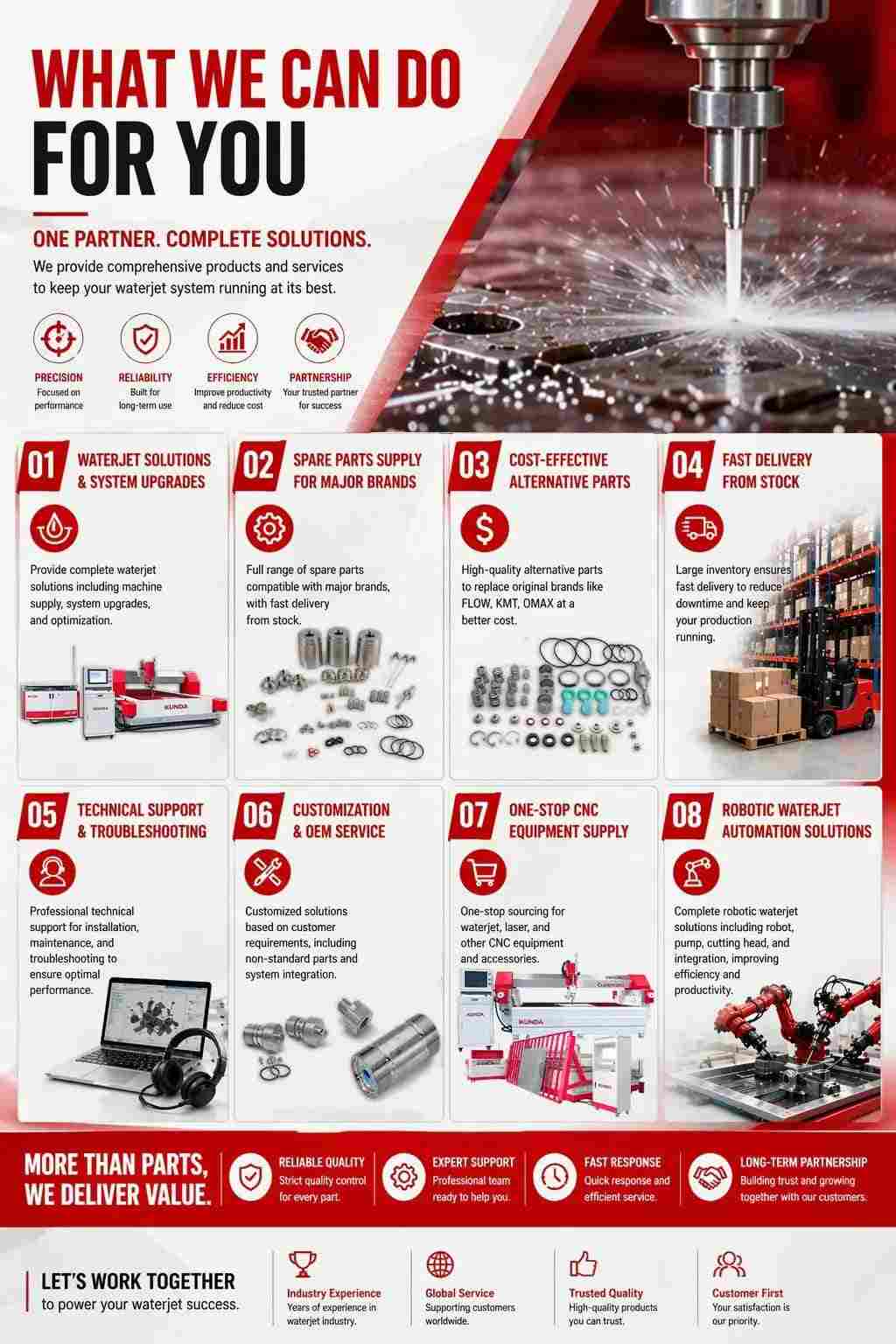
KUNDA provides waterjet cutting equipment, high-pressure pumps, pump parts, cutting head parts, consumables, and technical support to customers worldwide.
KUNDA supplies: high-pressure seals, seal kits, check valve parts, ceramic plungers, Waterjet Accumulators, high-pressure cylinders, booster parts, valve parts, sapphire nozzles, mixing tubing, filters, lubricants, and maintenance tools.
KUNDA also provides compatible replacement parts for several major waterjet cutting brands, including: FLOW, KMT, OMAX, AccuStream, BFT, WSI, Resato, and Techni. If customers are unsure which pump parts they need, they can provide KUNDA with the following information: waterjet pump brand, pump model, part number, photo of the used part, equipment nameplate, operating pressure, and current fault description.
KUNDA will help customers identify suitable replacement parts and provide practical maintenance advice.
KUNDA provides reliable pump parts, compatible replacement solutions, and practical technical support to waterjet cutting users worldwide.
If you require maintenance of your waterjet cutting high-pressure pump, please send the pump model, part number, equipment photos, or a description of the malfunction to KUNDA. We will help you identify suitable spare parts and provide practical maintenance solutions.
FAQ: Common Waterjet Cutting High-Pressure Pump Maintenance Issues
1. Why is waterjet cutting high-pressure pump maintenance important?
Because the high-pressure pump directly affects the pressure stability, cutting quality, component lifespan, and downtime of the waterjet cutting equipment. Good maintenance can reduce operating costs and improve production efficiency.
2. Which components of the waterjet cutting pump need to be checked regularly?
It is recommended to regularly check the high-pressure seal, sealing kit, check valve components, ceramic plunger, accumulator, filter, hydraulic oil, high-pressure lines, connectors, and related pump components.
3. How to determine if a waterjet cutting pump needs maintenance?
Common symptoms include pressure drop, pressure fluctuation, leakage, abnormal noise, short high-pressure seal lifespan, excessively high oil temperature, decreased cutting quality, and frequent equipment alarms.
4. How often should the high-pressure seal be replaced?
There is no fixed time. The lifespan of a high-pressure seal is affected by factors such as operating pressure, water quality, pump load, ceramic plunger condition, installation method, and daily operating time.
5. Why shouldn't a waterjet cutting pump operate at full load for extended periods?
Prolonged full-load operation increases wear, shortens seal life, raises hydraulic oil temperature, and increases the risk of downtime. Maintaining a reasonable operating margin helps improve pump stability.
6. Will an improper sapphire bore size affect pump pressure?
Yes. If the sapphire bore size is too large, exceeding the pump's flow capacity, the waterjet cutting pump may not be able to maintain the target pressure stably. Correct sapphire bore and nozzle matching is crucial.
7. What accessories should waterjet cutting users keep on hand?
It is recommended to keep high-pressure seals, seal kits, check valve accessories, ceramic plungers, accumulators, filters, sapphire bores, sand mixing tubes, on/off valve accessories, and maintenance tools on hand.