Waterjet Knowledge
When Should You Replace Waterjet Check Valve Parts?
When Should You Replace Waterjet Check Valve Parts?
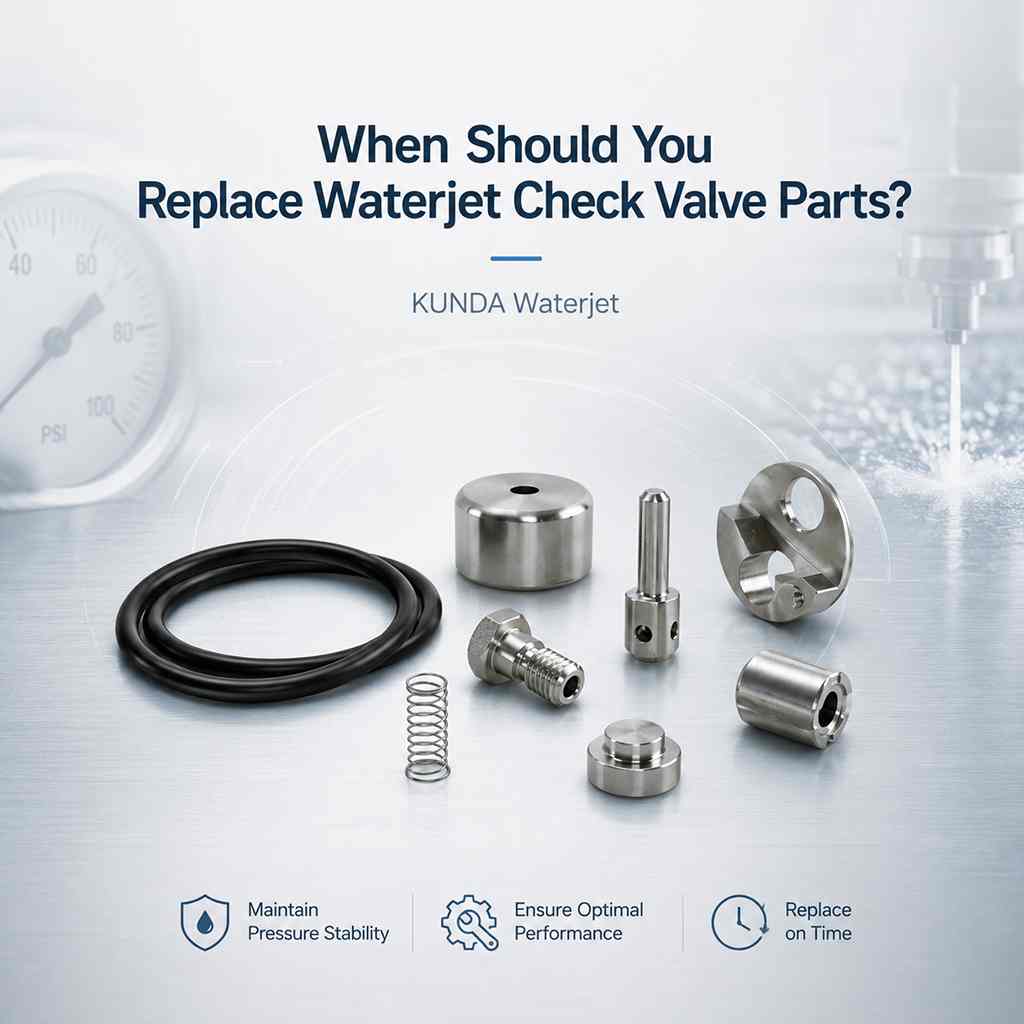
For users of Waterjet Cutting Machines, the high-pressure pump is the heart of the entire cutting system.
Inside the pump, check valve components play a crucial role in maintaining stable pressure and controlling the direction of water flow.
If these components become worn, damaged, clogged, or fail to seal properly, the Waterjet Pump may experience pressure loss, pressure fluctuations during cutting, abnormal noise, or even a complete shutdown. For factories that rely on Waterjet Equipment daily, check valve failure directly leads to downtime, reduced cutting quality, increased maintenance costs, and production delays.
So, when should waterjet check valve components be replaced?
What Are Waterjet Check Valve Parts?
Waterjet check valve components are critical parts of high-pressure pump systems; their primary function is to control the direction of water flow and assist the pump in generating and maintaining high pressure.
During pump operation, water must enter and exit the high-pressure chamber in the correct direction. Check valve components prevent backflow and facilitate stable pressure generation.
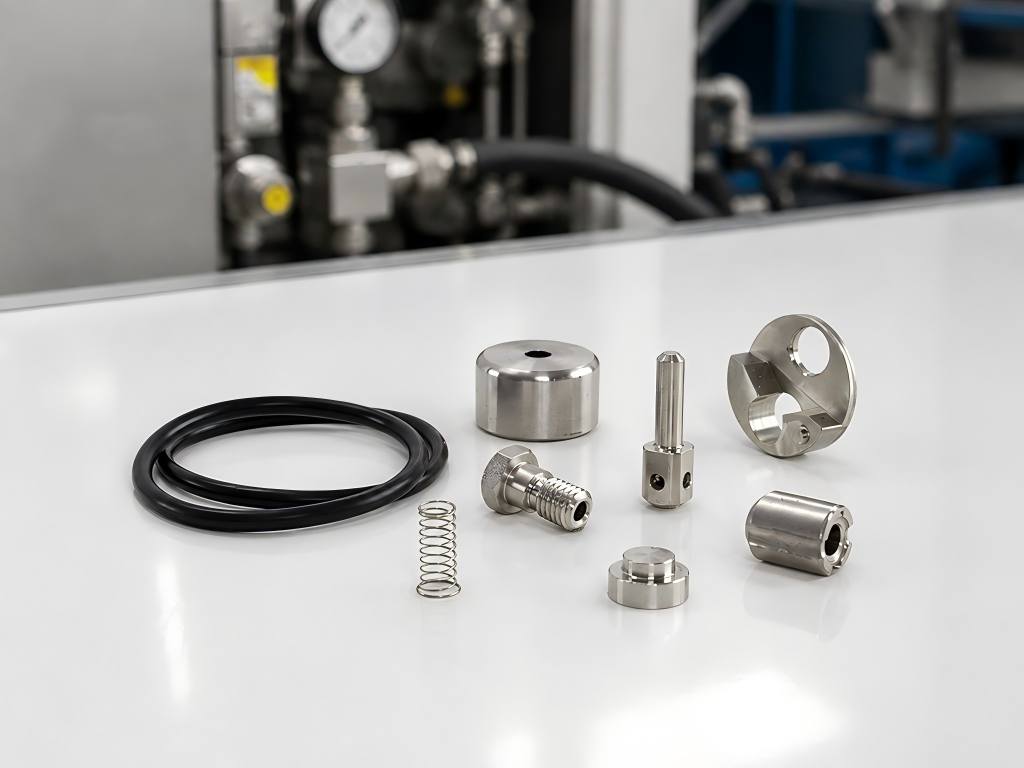
Common check valve-related components may include:
Check valve bodies, valve seats, valve cores, springs, seals, fasteners, high-pressure sealing assemblies, and related pump maintenance parts.
Different models and brands of Waterjet Pumps may utilize varying check valve designs; therefore, correctly matching parts before replacement is essential.
Why Are Check Valve Parts Important?
The check valve assembly directly affects the pressure stability of the waterjet pump. A poor seal in the check valve can lead to high-pressure water backflow or the inability to build sufficient pressure.
A check valve in good condition helps the waterjet pump achieve:
stable pressure output, smooth pump operation, a more consistent cutting jet, reduced risk of pressure loss, superior cutting quality, extended service life of related pump components, and reduced equipment downtime.
For waterjet equipment users, the timely replacement of worn check valve assemblies is a crucial aspect of pump maintenance.
Common Signs That Check Valve Parts Need Replacement
1. Pump fails to reach target pressure
One of the most common signs of a check valve malfunction is the pump's inability to reach the required operating pressure.If check valve components are worn or sealing is poor, the pump may fail to build sufficient pressure. Even if the operator increases the pressure setting, the actual pressure fails to reach the target value.
In such cases, customers should inspect not only the high-pressure seals but also the check valve components.
2. Pressure drop during cutting
If the waterjet pump reaches the required pressure initially but the pressure drops during the cutting process, check valve components may be the cause.A pressure drop affects cutting speed, edge quality, and cutting stability, and can lead to frequent equipment downtime.
Worn valve seats, damaged valve cores, broken springs, or sealing issues can all cause pressure loss during operation.
3. Pressure fluctuations
Stable pressure is crucial for waterjet cutting. If pressure fluctuates frequently, the cutting jet may become unstable.Pressure fluctuations can be caused by:
Worn check valve components
Accumulator issues
Worn high-pressure seals
Air in the water lines
Poor water supply conditions
Incorrect Nozzle Orifice size
If pump pressure continues to fluctuate after replacing seals, customers should carefully inspect the check valve components.
4. Abnormal pump noise
The pump may emit abnormal noise during operation if check valve components are damaged or not functioning smoothly.This can occur when valve components are stuck, worn, cracked, or operating abnormally. If the noise is accompanied by pressure instability, the check valve should be inspected.
5. Frequent seal failure
Check valve issues can also affect high-pressure seals. If pump pressure is unstable or pressure spikes intensify, seal wear rates may accelerate.If customers frequently replace seals yet experience short service lives, they should inspect the check valve components, ceramic plungers, accumulator, and water quality.
6. Backflow or reduced pump efficiency
The primary function of check valve components is to control the direction of water flow. If the valve fails to close properly, backflow may occur, thereby reducing pump efficiency. This can lead to:Slow pressure build-up
Pressure loss
Unstable pump operation
Increased energy consumption
Reduced cutting performance
Replacing worn check valve components helps restore normal pump performance.
Why Do Waterjet Check Valve Parts Wear Out?
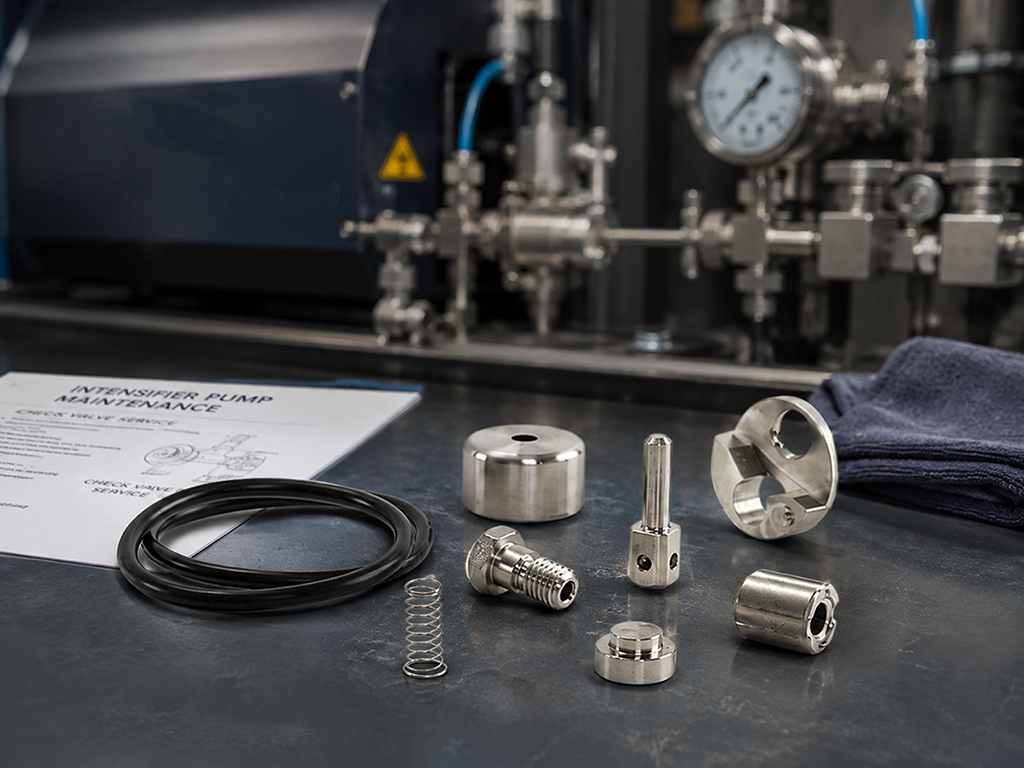
1. Prolonged Operation
Water Jet Pumps typically operate under extremely high pressure for extended periods. The check valve assembly opens and closes repeatedly during operation; consequently, natural wear and tear is inevitable over time.For equipment in daily use, inspection of the check valve assembly should be included in the routine maintenance schedule.
2. Poor Water Quality
Water quality directly affects high-pressure pump components. If the water contains impurities, rust, sand, or hard particles, these contaminants can damage the sealing surfaces of the check valve.Poor water quality can lead to:
Valve seat wear
Valve core damage
Seal failure
Reduced seal lifespan
Pressure instability
Effective water filtration is crucial for extending the service life of the check valve assembly and other pump components.
3. Pressure Shock
If the pump operates under conditions of severe pressure fluctuation or frequent pressure shocks, the wear rate of the check valve assembly may accelerate.Pressure shocks can be linked to the condition of the accumulator, seal wear, improper pump maintenance, or unstable water supply.
Maintaining stable pump system operation helps protect the check valve assembly.
4. Improper Installation
If the check valve assembly is installed incorrectly, contaminated during installation, or improperly tightened, the equipment may fail shortly after operation begins.Ensure the installation area is clean when replacing parts. Additionally, verify that the correct parts are used and that the installation orientation and positioning are accurate.
5. Use of Incorrect Replacement Parts
Check valve assemblies for different pump models may look similar but can differ in dimensions, structure, pressure ratings, and seal design.Using the wrong replacement parts can lead to leaks, pressure loss, installation issues, or accelerated wear.
KUNDA can assist customers in matching the appropriate check valve assembly based on pump model, part number, product photos, or equipment information.
How Often Should Waterjet Check Valve Parts Be Replaced?
There is no standardized replacement schedule for the various types of equipment. Replacement frequency depends on the following factors:
Pump brand and model
Operating pressure
Daily operating hours
Water quality
Maintenance status
Cutting load
Seal service life
Pressure stability
Component quality
Operator habits
For equipment operating under heavy loads, check the check valve components regularly. Promptly arrange for replacement if pressure instability occurs, the pump fails to reach the set pressure, or valve components show significant wear.
Generally, scheduled replacement is preferable to emergency repairs following equipment downtime.
How to Inspect Waterjet Check Valve Parts?
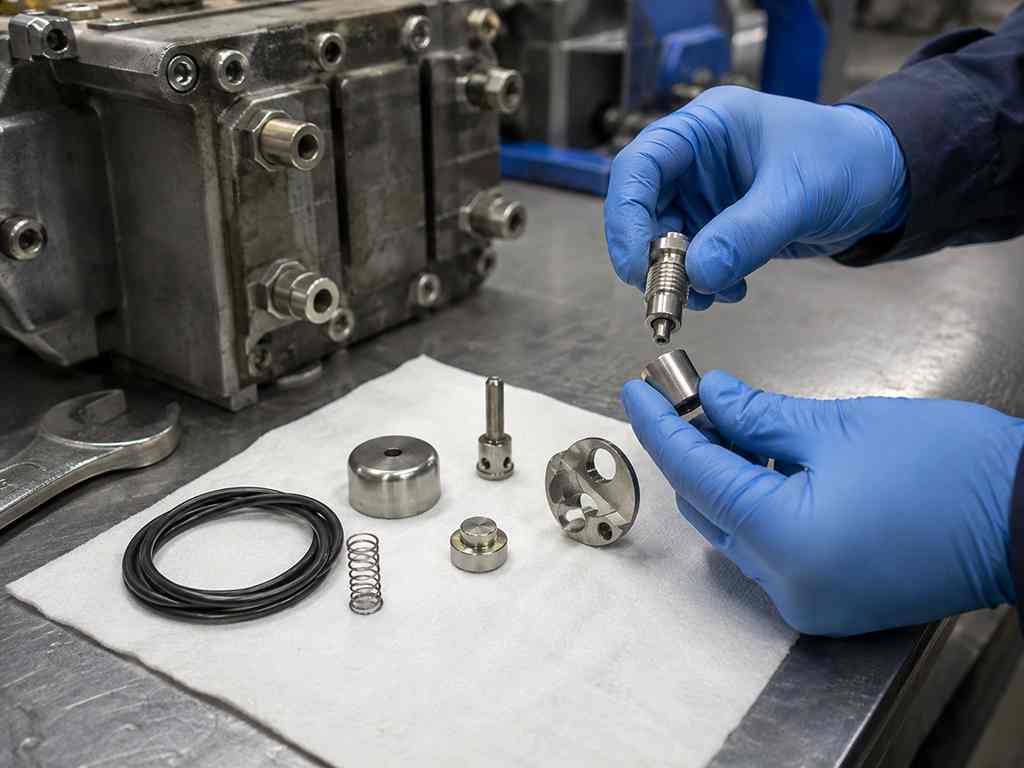
When inspecting check valve components, the customer should check for the following:
Wear or damage to the valve seat
Scratches or cracks on the valve core surface
Broken springs or reduced spring tension
Damage to seals
Presence of impurities or blockages
Smooth operation of the valve body
Correct installation orientation
Cleanliness of the associated pump chamber
If any component is found to be damaged, it should be replaced with a suitable spare part.
Additionally, the customer should inspect related components, such as high-pressure seals, ceramic plungers, accumulators, filters, and the water supply system.
What Happens If You Do Not Replace Worn Check Valve Parts?
Failure to replace worn check valve components in a timely manner can lead to more serious issues for the customer.
Potential consequences include:
Inability of the pump to maintain pressure
Inconsistent cutting quality
Accelerated seal wear
Increased stress on pump components
Increased machine downtime
Higher maintenance costs
Delays in production orders
In many cases, timely replacement of small check valve components helps avoid costly repairs down the line.
How KUNDA Helps Customers with Waterjet Check Valve Parts?
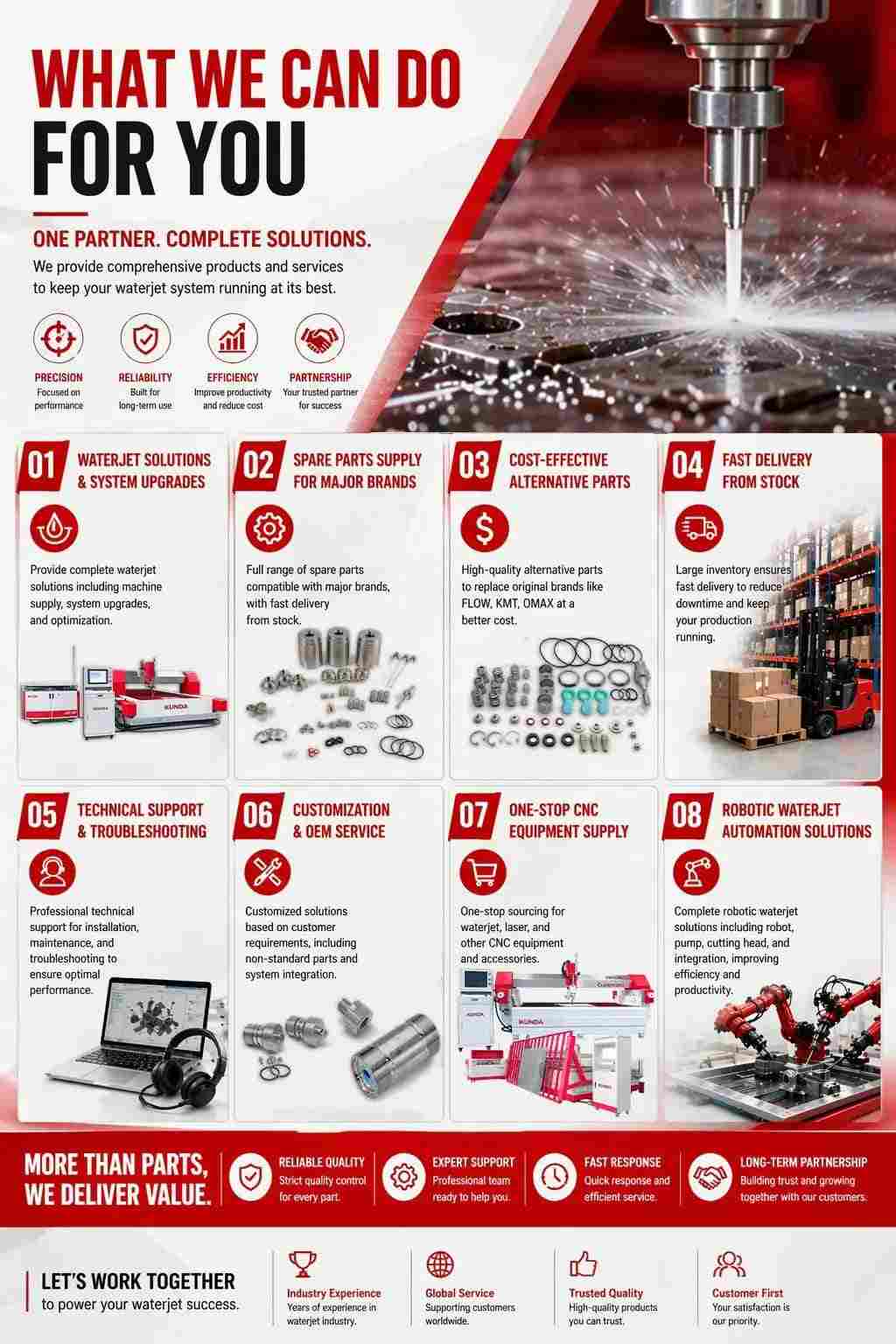
KUNDA provides waterjet pump components, spare parts, consumables, and technical support to customers worldwide.
Our waterjet pump components include:
Check valve components
High-pressure seals
Seal assemblies
Ceramic plungers
Accumulators
High-pressure cylinders
Intensifier components
Valve components
Nozzles (jewel orifices)
Mixing Tubes (Focusing Tubes)
Filters
Lubricants
Maintenance tools
KUNDA also offers compatible replacement parts for many mainstream waterjet brands, including:
FLOW
KMT
OMAX
AccuStream
BFT
WSI
Resato
Techni
If customers are unsure which specific check valve components they need, they can provide KUNDA with the following information:
Pump brand
Pump model
Part number
Photos of old parts
Equipment nameplate
Operating pressure
Description of current pressure issues
Our team will assist in identifying the correct replacement parts and provide practical solutions.
When customers contact KUNDA, they receive more than just a simple price quote. We are committed to helping customers minimize ordering errors, reduce downtime, and improve pump maintenance efficiency.
Customers benefit from:
Accurate part number matching
Compatible check valve components
Cost-effective pump repair parts
Fast delivery support
Technical communication and consultation
One-stop waterjet parts supply
Maintenance advice regarding pressure issues
Long-term spare parts planning support
For waterjet users, choosing the right parts supplier helps ensure smoother equipment operation and lowers long-term operating costs.
Customers should carefully inspect check valve components if they encounter issues such as the pump failing to reach rated pressure, pressure drops or fluctuations during cutting, abnormal noise, or frequent seal failure.
Timely replacement of worn check valve components helps restore pump performance, reduce downtime, protect related components, and enhance cutting stability.
KUNDA stands ready to provide waterjet users worldwide with reliable check valve components, pump repair parts, compatible replacement solutions, and practical technical support. If you require waterjet check valve components, please provide KUNDA with your pump model, part number, a photo of the old part, or a description of the pressure issue, and we will assist you in identifying the appropriate replacement.
FAQ: Waterjet Check Valve Parts Replacement
1. What is the function of waterjet check valve components?
Waterjet check valve components control the direction of water flow within the high-pressure pump. They assist the pump in building pressure and prevent backflow during operation.2. When should waterjet check valve components be replaced?
Check valve components should be replaced when the pump fails to reach the set pressure, pressure drops during cutting, pressure fluctuates, abnormal noise occurs, or if the valve components show signs of significant wear or damage.3. Can worn check valve components cause pressure loss?
Yes. Worn or damaged check valve components are a common cause of pressure loss in waterjet pumps. If the valve seal is compromised, the pump cannot maintain stable pressure.4. Can check valve failure damage high-pressure seals?
Yes. Check valve failure can lead to unstable pressure or pressure spikes, thereby shortening the service life of high-pressure seals.5. What causes premature wear of waterjet check valve components?
Common causes include prolonged operation, poor water quality, pressure fluctuations, improper installation, contaminants, and the use of incorrect replacement parts.6. Should seals and check valve components be replaced at the same time?
It depends on the condition of the pump. If both the seals and check valve components are worn, replacing them simultaneously helps restore pump stability and reduces the need for repeated maintenance.7. Can incorrect check valve components cause installation issues?
Yes. Check valve components that look similar may differ in dimensions, structure, and pressure ratings. Using the wrong part can lead to leaks, pressure loss, or installation failure.8. How can I identify the correct check valve components?
You can provide KUNDA with the pump brand, model, part number, photos of the old parts, the equipment nameplate, and operating pressure information. KUNDA will assist you in identifying the appropriate replacement parts.9. Does KUNDA offer compatible check valve components?
Yes. KUNDA provides compatible waterjet check valve components and pump maintenance parts for many major waterjet brands, including systems from FLOW, KMT, OMAX, AccuStream, BFT, WSI, Resato, Techni, and others.10. How does regular maintenance reduce check valve failures?
Regular maintenance helps detect wear early, remove impurities, and maintain stable water quality, as well as allowing for the replacement of worn parts before serious pump failures occur, thereby reducing downtime and maintenance costs.