Waterjet Knowledge
Why Does a Waterjet Pump Make Abnormal Noise?
Why Does a Waterjet Pump Make Abnormal Noise?
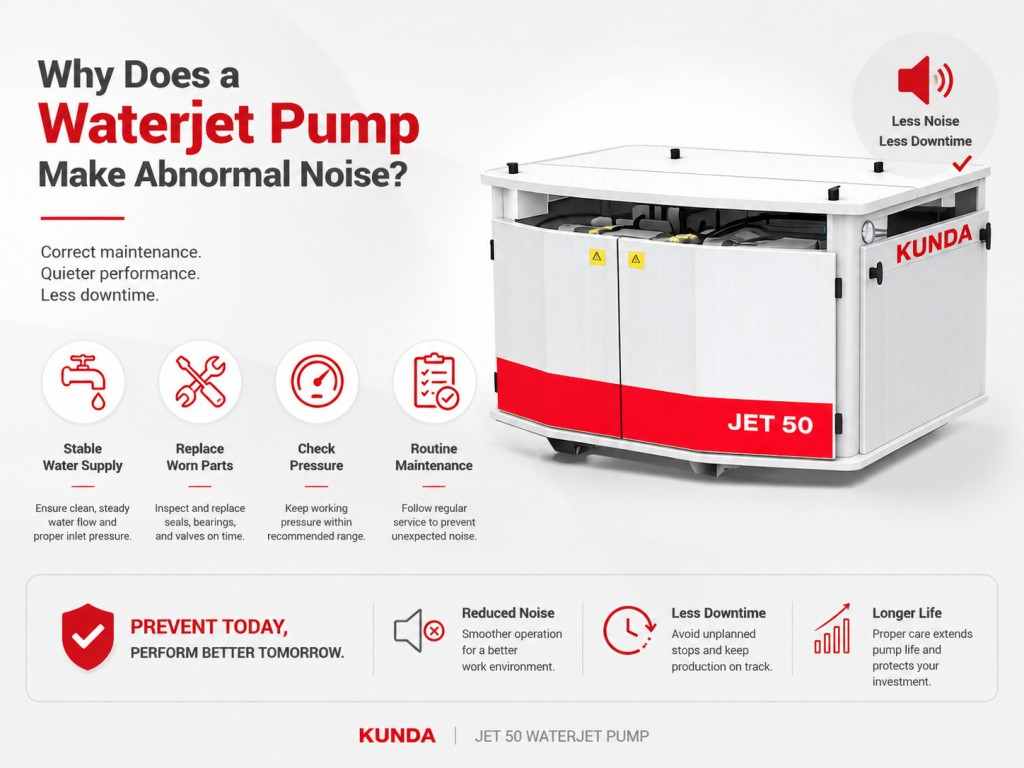
While Waterjet Pumps naturally produce some operating noise, users should pay close attention if the noise level suddenly increases or if there are signs such as knocking, vibration, high-pitched squealing, or other unusual sounds.
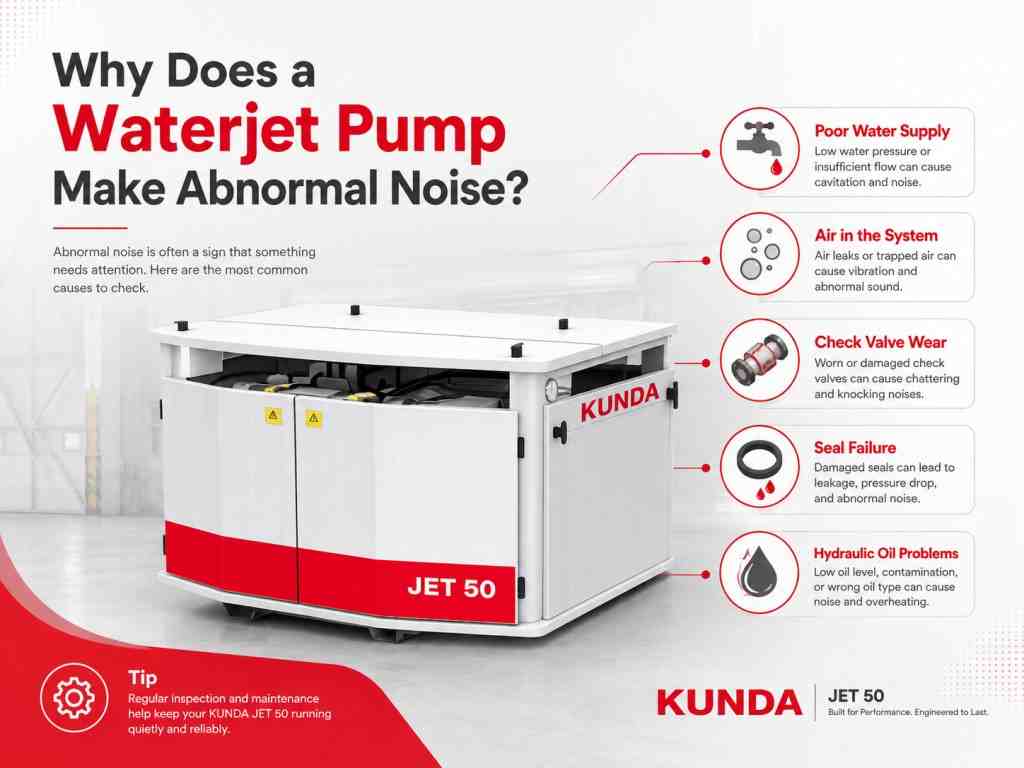
Abnormal noise is often an early warning sign of a malfunction. Potential causes include inadequate water supply, air entrapment in the system, worn check valve components, seal failure, damaged ceramic plungers, accumulator issues, hydraulic fluid problems, loose components, or excessive pump load.
Failure to promptly troubleshoot and resolve these issues can lead to pressure loss, water leakage, reduced cutting quality, shortened component lifespan, and equipment downtime.
Why Abnormal Pump Noise Should Not Be Ignored?
Waterjet high-pressure pumps operate under conditions involving high pressure and repetitive cycling. A sudden change in the pump's operating sound usually indicates a system malfunction.Ignoring abnormal pump noise can lead to:
Unstable pump pressure
Damage to high-pressure seals
Check valve failure
Ceramic plunger wear
Water leakage
Hydraulic system issues
Reduced cutting quality
Unexpected downtime
For waterjet users, early inspection helps reduce maintenance costs and prevents more severe pump failures.
Common Causes of Abnormal Noise in Waterjet Pumps
1. Poor Water Supply Conditions
Inadequate water supply is a common cause of abnormal pump noise. If the inlet pressure is too low or the flow rate is insufficient, the pump's operation may become unstable.Common causes include clogged filters, an unstable water source, insufficient inlet flow, air in the piping, or poor water quality.
Users should regularly check inlet pressure, water filters, water lines, and water quality. A clean and stable water supply helps protect seals, check valves, ceramic plungers, and other pump components.
2. Air in the System
If air enters the water circuit or pump system, the pump may produce irregular noise or vibration. Air can also cause pressure fluctuations and unstable cutting performance.This may result from loose inlet connections, poor sealing, insufficient water supply, or failure to fully bleed air from the system before operation.
Before starting the machine, operators should ensure the water circuit is full and all air has been purged from the system.
3. Worn Check Valve Components
Check valve components control the direction of water flow within the high-pressure pump. If these components are worn, clogged, cracked, or fail to seal properly, the pump may produce knocking sounds or operate unstably.Common symptoms include:
Failure to reach rated pressure
Pressure fluctuations
Slow pressure buildup
Water backflow
Abnormal knocking sounds
Frequent seal failure
If these issues occur, users should inspect the check valve body, seat, poppet, spring, seals, and related components.
4. High-Pressure Seal Failure
High-pressure seals are critical wear parts in waterjet pumps. If seals are worn, damaged, or improperly installed, the pump may experience leakage, loss of pressure, or unstable operating noise.When abnormal noise is accompanied by leakage or pressure loss, users should inspect the high-pressure seals and seal assemblies.
Using the correct seal assembly is crucial. Incorrect seals can lead to a shortened service life, leakage, and the need for repeated repairs.
5. Ceramic Plunger Damage
Ceramic plungers work in conjunction with high-pressure seals. Scratches, cracks, or wear on the surface of the ceramic plunger can rapidly damage newly installed seals and cause unstable pump operation. Damage to the ceramic plunger may lead to:Reduced seal service life
Water leakage
Unstable pressure
Abnormal friction noise
Frequent pump maintenance
Before replacing seals, the customer should verify that the ceramic plunger surface is smooth and clean.
6. Accumulator Issues
Accumulators help reduce pressure pulsations in high-pressure systems. If an accumulator is damaged or malfunctioning, the pump may experience severe vibration, pressure fluctuations, or an unstable cutting jet.If abnormal noise occurs accompanied by pressure pulsations, the customer should inspect the condition of the accumulator.
A properly functioning accumulator helps improve pressure stability and reduces stress on pump components.
7. Hydraulic Oil Issues
For intensifier-style waterjet pumps, the hydraulic system is critical. If the hydraulic oil level is too low, the oil is contaminated, or the oil temperature is too high, the pump may generate abnormal hydraulic noise.Customers should regularly check:
Hydraulic oil level
Oil cleanliness
Oil temperature
Cooling system
Hydraulic hoses
Hydraulic valves
Hydraulic seals
Proper hydraulic system maintenance helps ensure smooth pump operation and reduces abnormal noise.
8. Loose Components or Coupling Issues
Sometimes, abnormal noise may stem from loose bolts, fittings, guards, piping, motor components, or couplings.If the coupling is worn, loose, or misaligned, the pump may produce vibration, knocking sounds, or rotational noise.
Customers should inspect pump mounting bolts, high-pressure fittings, the pump base, the motor coupling, and hose clamps. Loose components should be tightened before resuming production.
How to Check the Problem Step by Step
When a waterjet pump produces abnormal noise, customers can perform checks in the following order:1. Check inlet water pressure and water supply status.
2. Check for air ingress in the water lines.
3. Check the filter and water quality.
4. Check pump pressure stability.
5. Check high-pressure seals.
6. Check check valve assemblies.
7. Check ceramic plungers.
8. Check the condition of the accumulator.
9. Check hydraulic oil level and temperature.
10. Check for loose components and the condition of the motor and coupling.
11. Verify the compatibility of the jewel nozzle (orifice) with the nozzle assembly.
12. Record the noise characteristics and any equipment alarm messages.
This systematic inspection method helps customers identify the root cause faster and avoid replacing the wrong parts.
How KUNDA Helps Customers Solve Pump Noise Problems
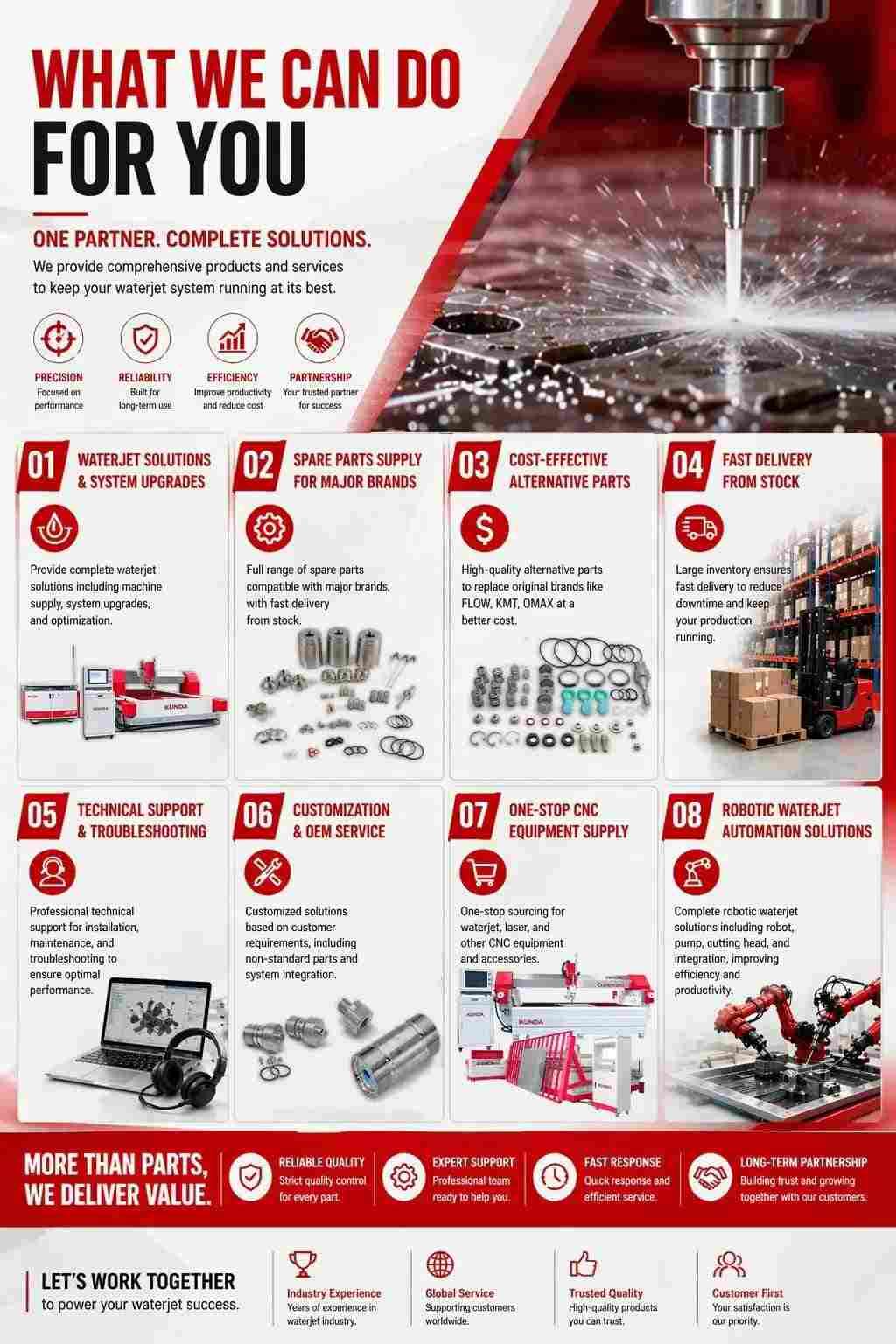
KUNDA provides Waterjet Equipment, high-pressure pumps, pump components, cutting head assemblies, consumables, and technical support to customers worldwide.To address abnormal pump noise and maintenance issues, KUNDA offers the following products:
High-pressure seals
Seal assemblies
Check valve parts
Ceramic plungers
Accumulators
High-pressure cylinders
Intensifier parts
Hydraulic pump parts
Jewel nozzles (Orifices)
Focusing Tubes
Filters
Lubricants
Maintenance tools
KUNDA also supplies compatible replacement parts for many mainstream waterjet brands, including FLOW, KMT, OMAX, AccuStream, BFT, WSI, Resato, Techni, and other systems.
If customers cannot identify the specific component causing the noise, they can provide us with the pump model, part number, equipment photos, pressure status, a description of the noise, or a short video of the pump in operation. KUNDA will assist in troubleshooting the issue and recommending the appropriate spare parts.
Abnormal noise in waterjet pumps should not be ignored. Potential causes include: inadequate water supply, air in the system, worn check valve components, seal failure, damaged ceramic plungers, accumulator malfunction, hydraulic fluid issues, loose components, coupling failure, or excessive pump load.
If your waterjet pump is making abnormal noise, please send the pump model, a description of the issue, and photos or a video of the pump in operation to KUNDA. We will assist you in identifying the necessary parts and provide a practical maintenance solution.
FAQ: Abnormal Noise in Waterjet Pumps
1. Why is my waterjet pump making abnormal noise?
Possible causes for abnormal noise in waterjet pumps include: insufficient water supply, air in the system, worn check valve components, damaged seals, scratched ceramic plungers, accumulator failure, hydraulic oil issues, loose components, or coupling failure.2. Can worn check valve components cause pump noise?
Yes. Worn or damaged check valve components can lead to pressure fluctuations, backflow, knocking sounds, and unstable pump operation.3. Can insufficient water supply cause abnormal pump noise?
Yes. If the inlet water flow is inadequate or air enters the water circuit, the pump may produce irregular noise, and pressure may become unstable.4. Should I shut down the machine if the pump suddenly starts making noise?
If the noise appears suddenly and is loud, or is accompanied by a drop in pressure, leakage, vibration, or an alarm, it is recommended to shut down the machine and inspect the pump before resuming production.5. Can KUNDA assist in diagnosing waterjet pump noise issues?
Yes. Customers can provide the pump model, part numbers, photos, pressure readings, a description of the noise, or a short video of the pump in operation. KUNDA will assist in troubleshooting potential causes and recommending suitable spare parts.