Waterjet Knowledge
Why Should a Waterjet Pump Not Run at Full Load for a Long Time?
Why Should a Waterjet Pump Not Run at Full Load for a Long Time?
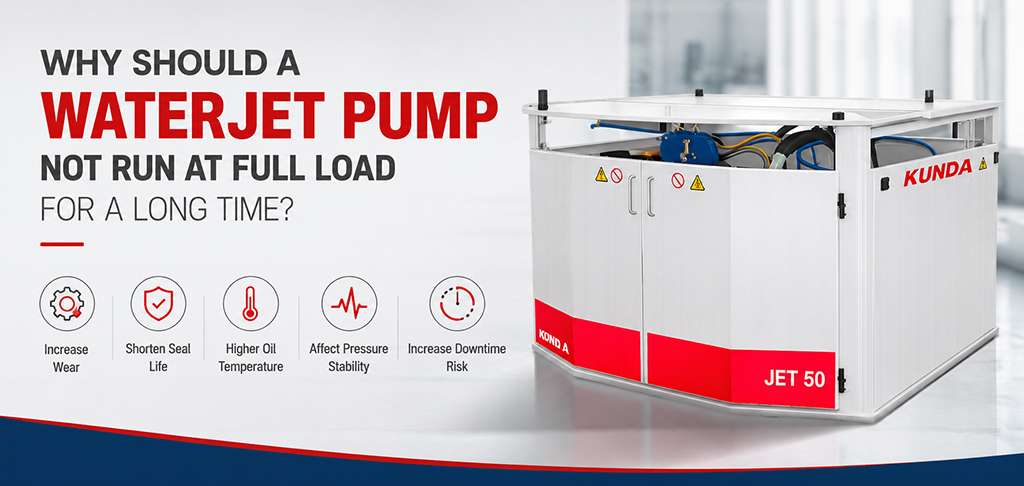
The waterjet pump is the core power source of a Waterjet Cutting Machine. It provides the high-pressure water needed to cut metal, stone, glass, ceramics, rubber, composite materials, and a wide variety of other materials.
For many waterjet users, higher pressure and power seem to mean faster cutting speeds and higher production efficiency. However, they overlook the fact that running a waterjet pump at full load leads to more frequent replacements of parts.
While Waterjet Pumps are designed to operate under high pressure, continuous full-load operation accelerates wear, increases maintenance costs, shortens component lifespan, and even causes more machine downtime. For long-term stable production, it is generally best to operate the pump within its appropriate operating range, rather than constantly overloading it.
What Does Full Load Mean for a Waterjet Pump?
Full-load operation typically refers to a Water Pump operating near its maximum rated pressure, maximum motor power, or maximum flow rate for an extended period.
For example, a water pump designed for high-pressure cutting might be able to reach its rated pressure. However, this doesn't mean the machine should operate at maximum capacity every day.
Just as a car engine can reach high speeds, but prolonged operation at top speed increases heat generation, fuel consumption, wear, and maintenance risks, the same applies to Water Jet Pumps. They require a reasonable operating margin to maintain stable performance.
1. Full-Load Operation Increases Wear of Pump Parts
Water jet pumps operate at extremely high pressures. When the pump runs near full load for extended periods, many internal components are subjected to even greater pressure.
Commonly affected components include: high-pressure seals, sealing assemblies, check valve components, ceramic plungers, booster components, high-pressure cylinders, accumulators, hydraulic system components, and valve bodies and seats. When these components are continuously subjected to high pressure, the wear rate accelerates. This means customers may need to replace seals, valves, and other pump components more frequently. For water jet users, this directly increases maintenance costs.
2. It May Shorten Seal Life
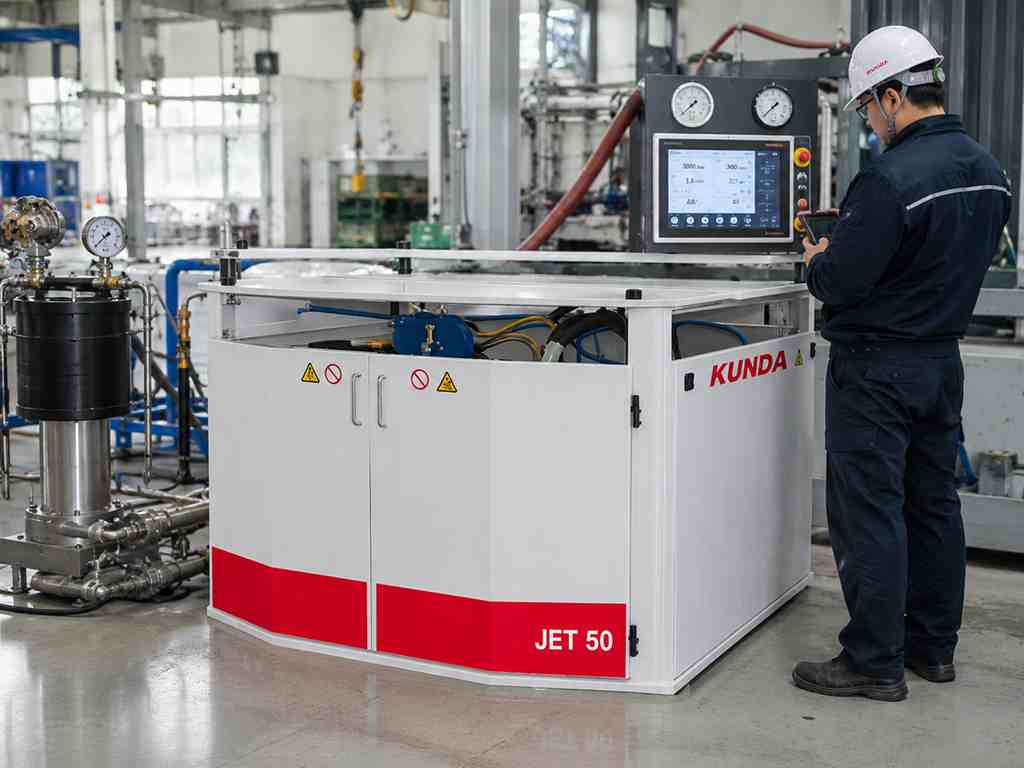
High-pressure seals are critical wear parts in water jet pumps. Seal lifespan is affected by factors such as pressure, water quality, installation method, operating temperature, and pump operating conditions.
If the pump operates at full load for extended periods, the sealing area will experience greater pressure stress and thermal effects, leading to accelerated seal wear, leakage, or pressure instability.
Short seal life is one of the most common problems for water jet pump users. In many cases, reducing unnecessary full-load operation helps extend seal life and reduce replacement frequency.
3. It Can Cause Higher Oil Temperature
For booster water jet pumps, the hydraulic system is crucial. When the pump operates under heavy load for extended periods, the hydraulic oil temperature can rise more rapidly.
Excessively high oil temperature can affect:
Hydraulic system stability
Sealing performance
Pump efficiency
Component lifespan
Machine alarm frequency
Long-term maintenance costs
If the oil temperature remains consistently high, the pump may experience operational instability or require more frequent maintenance. Therefore, proper cooling, oil quality, and load control are essential for the operation of water jet pumps.
4. Pressure Stability May Be Affected
Stable pressure is crucial for waterjet cutting quality. If the water pump is constantly operating at maximum load, pressure fluctuations become more pronounced, especially with component wear or improper system maintenance.
Unstable pressure can lead to: poor cut edge quality, unstable water flow, reduced cutting accuracy, increased material waste, increased abrasive consumption, and more frequent machine adjustments. For customers cutting stone, metal, glass, ceramics, or thick materials, stable pressure is often more important than simply pursuing the highest possible pressure.
5. Full Load Can Increase Downtime Risk
One of the biggest hidden costs in waterjet cutting is downtime.
If a pump stops because of seal failure, valve problems, high oil temperature, leakage, or pressure instability, the whole Waterjet Machine may stop working. Even a small pump part can delay production.
Continuous full-load operation may increase the risk of unexpected maintenance, especially when the pump is already used for long hours every day.
For customers with regular production orders, avoiding unnecessary downtime is a key way to reduce total cutting cost.
6. Higher Load Does Not Always Mean Lower Cost
Some users believe that higher pressure always means faster cutting speeds and lower production costs. However, in actual production, the total cost depends on many factors, including:
Material type
Material thickness
Cutting quality requirements
Aperture
Nose size
Abrasive flow rate
Pump operating conditions
Cutting speed
Spare parts life
Machine downtime
If the pump is running at full capacity, but consumables wear out faster, abrasive consumption increases, and maintenance frequency is higher, then the total production cost may actually be higher.
More balanced cutting parameters generally lead to better long-term cost control.
7. Proper Orifice and Nozzle Matching Is Important
Pump load is closely related to the combination of orifice plate and nozzle.
If the orifice plate is too large or the system configuration is inappropriate, the pump may need to work harder to maintain pressure. This increases the load and reduces pump stability.
The correct orifice plate and Focusing Tube combination helps customers control:
Pump load
Water flow rate
Abrasive consumption
Cutting speed
Cutting quality
Consumable life. Kunda can help customers select the appropriate orifice plate, nozzle, and pump components based on pump model, pressure rating, cutting material, and production requirements.
8. Regular Maintenance Helps Keep the Pump Stable
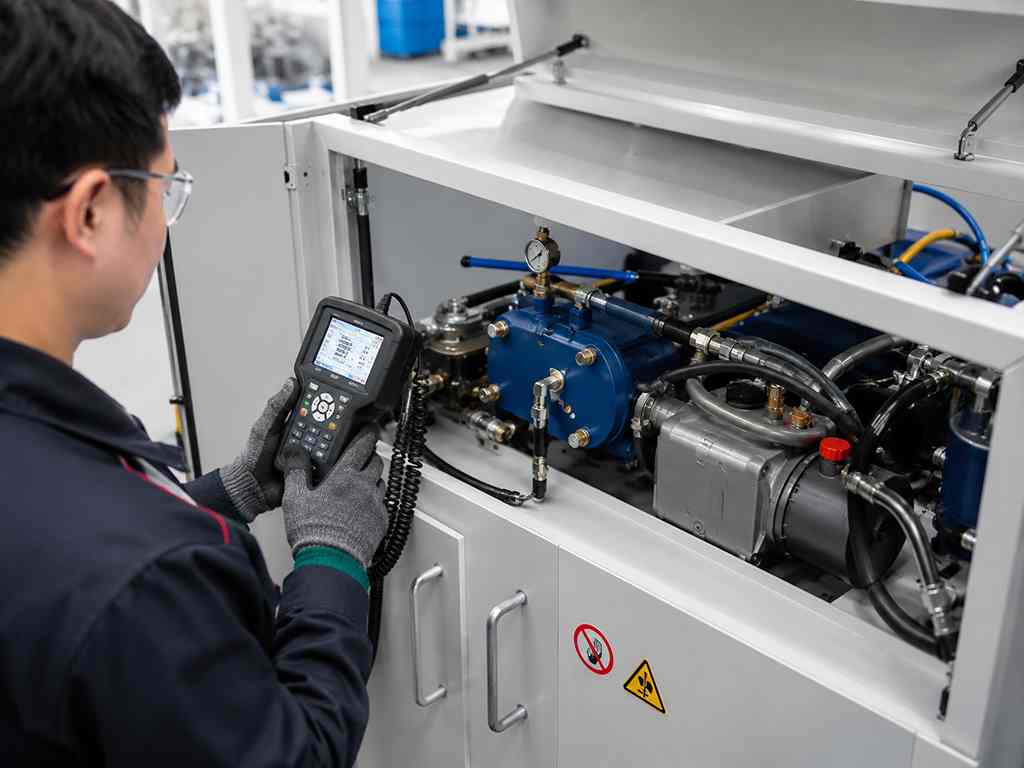
To avoid damage from full-load operation and reduce pump failures, customers should develop a regular maintenance plan.
Recommended maintenance points include: Regularly inspecting high-pressure seals; inspecting check valve components; monitoring oil temperature; checking water quality and filtration status; timely replacement of filter elements; checking hydraulic oil condition; checking accumulator performance; confirming orifice plate and nozzle matching; and having commonly used spare parts readily available. A good maintenance plan helps the pump operate more smoothly and reduces unexpected repair costs.
9. Keep a Reasonable Operating Margin
Water jet pumps should not always be operated at their limits. Maintaining a reasonable operating margin helps improve pump stability and extend component life.
Appropriate operating pressure and load depend on the pump model, the material being cut, material thickness, orifice size, nozzle size, and cutting speed requirements.
For most customers, the goal should be stable cutting performance, reasonable spare parts consumption, and low total operating costs, not just maximum pressure.
How KUNDA Helps Customers Improve Waterjet Pump Operation
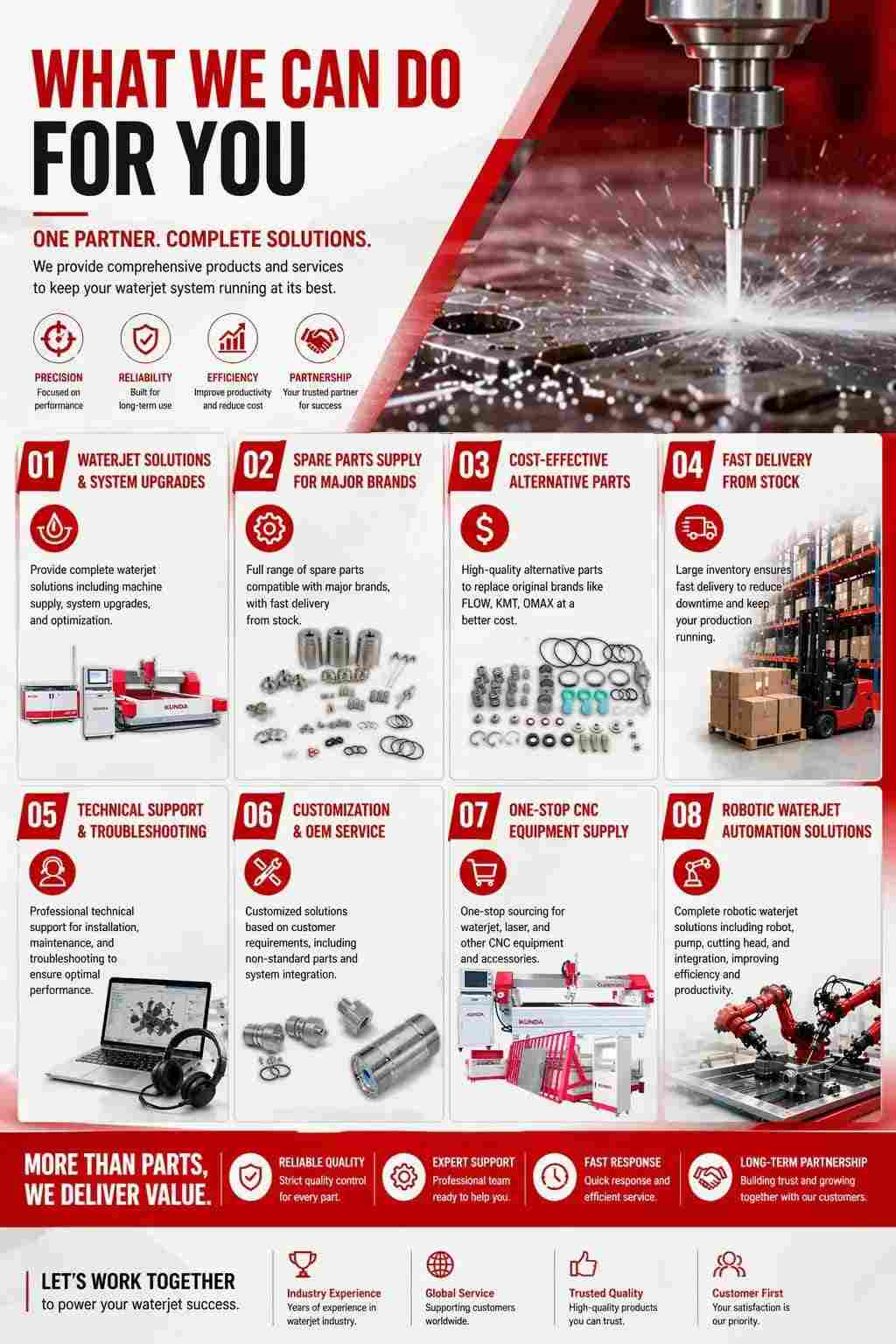
KUNDA provides waterjet cutting machines, high-pressure pumps, pump parts, cutting head parts, consumables, and technical support to customers worldwide.
We offer the following services: Waterjet pump spare parts supply; High-pressure seals and sealing kits; Check valve parts; Accumulator replacement; Ceramic plungers; Nozzles and focusing tubes; Compatible parts for major waterjet brands; Pump maintenance advice; Nozzle and nozzle matching support; Troubleshooting for unstable pressure; Regular maintenance and spare parts planning. If your waterjet pump experiences problems such as unstable pressure, short seal life, excessive oil temperature, leakage, or frequent shutdowns, please send your pump model, machine photos, part number, or a description of the problem to KUNDA. Our team will assist you in finding suitable parts and provide practical advice.
Water jet pumps can operate under high pressure, but without proper maintenance and correct configuration, they should not be run at full load for extended periods.
Continuous full-load operation can accelerate wear, shorten seal life, increase oil temperature, affect pressure stability, and increase the risk of downtime.
To ensure long-term production, customers should select appropriate cutting parameters, use the correct orifice and nozzle combinations, perform regular pump maintenance, and keep commonly used spare parts readily available.
Kunda is committed to helping water jet users worldwide improve pump stability, reduce maintenance costs, and ensure efficient operation of Water Jet Equipment.
FAQ: Waterjet Pump Full-Load Operation
1. Can A Water Jet pump be operated at full load?
Yes, a water jet pump can reach its rated capacity when needed. However, prolonged continuous full-load operation can increase wear, maintenance costs, and downtime risks.2. Why does full-load operation shorten the lifespan of pump components?
Full-load operation places higher pressure stress and thermal effects on pump components. This can accelerate wear on seals, check valves, ceramic plungers, hydraulic components, and other high-pressure parts.3. Does higher pressure always mean better cutting results?
Not always. Higher pressure may improve certain cutting applications, but cutting performance also depends on abrasive flow rate, nozzle size, material thickness, cutting speed, and machine condition. Optimal results come from balanced cutting parameters.4. How to reduce the load on a water jet pump?
You can reduce unnecessary pump load by using the correct orifice and nozzle combination, maintaining a stable water quality, replacing worn pump components promptly, and selecting appropriate cutting parameters based on the material.5. What are the common signs of water jet pump overload?
Common signs include unstable pressure, frequent seal failure, excessively high oil temperature, leaks, unusual noise, decreased cutting quality, and more frequent machine alarms.6. How can KUNDA assist with waterjet pump maintenance?
KUNDA provides waterjet pump parts, high-pressure seals, seal kits, check valve parts, accumulators, ceramic plungers, orifices, nozzles, and technical support. Customers can provide the pump model, part number, or photograph for matching and troubleshooting.