
Waterjet Solutions
Why Does a Waterjet Pump Lose Pressure and How to Fix It?
Why Does a Waterjet Pump Lose Pressure and How to Fix It?
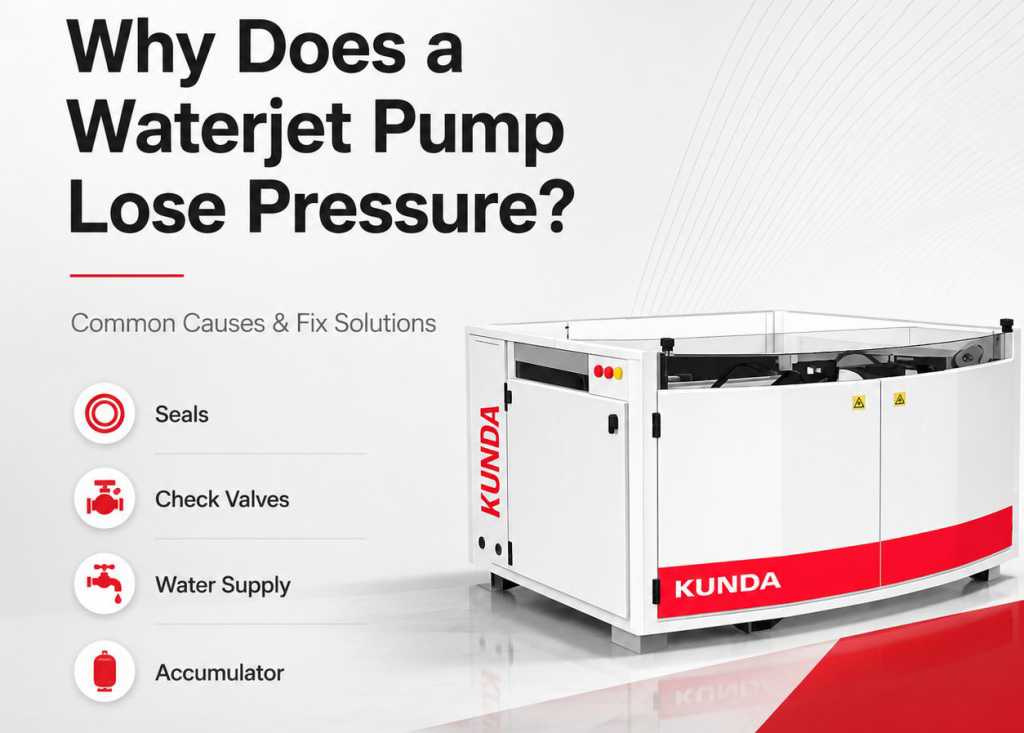
For users of Waterjet Cutting Machines, pump pressure stability is crucial. A drop in pressure can lead to inconsistent cutting quality, reduced cutting speeds, or even the inability to cut through the material effectively.
Pressure loss is one of the most common issues in Waterjet Cutting Systems. It stems from a variety of causes, including worn pump components, seal failures, check valve malfunctions, poor water supply conditions, accumulator issues, nozzle mismatches, or inadequate maintenance.
For factories that rely on Waterjet Equipment for daily operations, pressure loss is more than just a technical challenge; it results in a cascade of consequences, such as increased production costs, material waste, delayed orders, and equipment downtime.
In this article, KUNDA analyzes the common causes of pressure loss in Waterjet Pumps and outlines how customers can resolve this issue more efficiently.
Why Pump Pressure Matters in Waterjet Cutting
The high-pressure pump serves as the core power source for waterjet cutting machines, delivering the high-pressure water stream required to cut metal, stone, glass, ceramics, rubber, composites, and various other materials.
Maintaining stable pump pressure ensures consistent waterjet performance, thereby enhancing:
cutting quality, cutting precision, cutting speed, edge finish, equipment stability, the service life of wear parts, and production efficiency.
Conversely, a drop or fluctuation in pump pressure can lead to issues such as rough cut edges, incomplete cuts, reduced cutting speeds, increased abrasive consumption, and higher maintenance costs.
Common Signs of WaterJet Pump Pressure Loss
Pressure issues with waterjet pumps can manifest in various ways; common signs include:
1. Failure to reach the target pressure
2. Pressure drop during cutting
3. Fluctuating pressure
4. Reduced cutting speed
5. Inability to cut through the material
6. Deterioration of cut edge quality
7. Water leakage around the pump body
8. Frequent seal failure
9. Abnormal pump noise
10. Frequent equipment shutdowns or alarms
When these issues arise, one should not simply adjust the pressure settings but instead systematically inspect the entire high-pressure system.
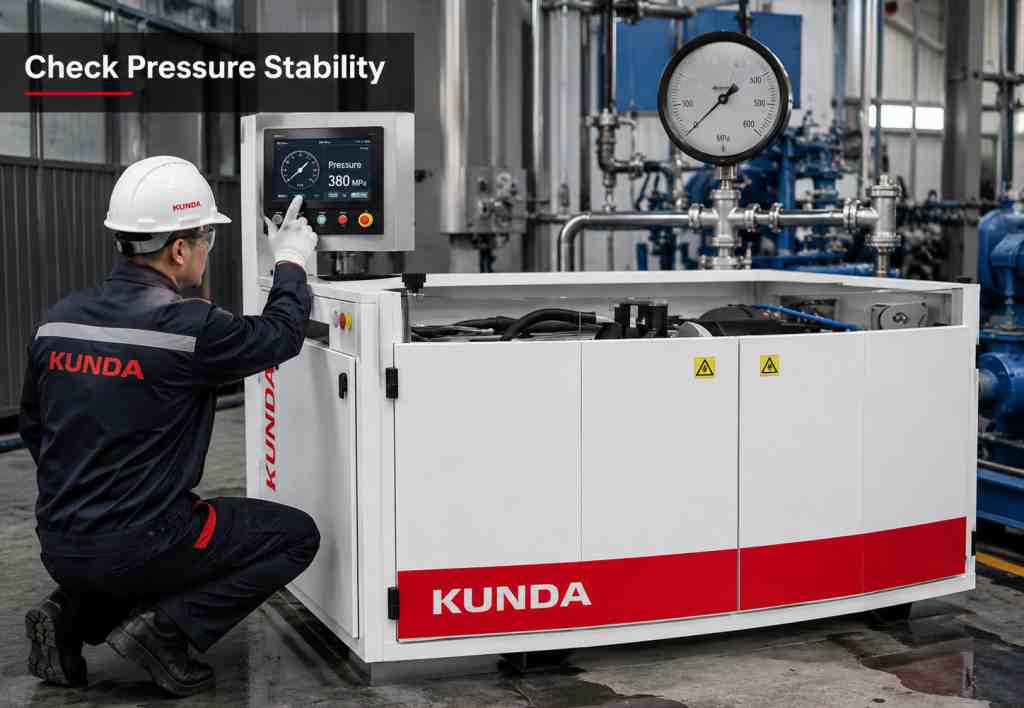
1. Worn High-Pressure Seals
High-pressure seals are among the most common causes of pressure loss in waterjet pumps.
When seals are worn, damaged, improperly installed, or mismatched, high-pressure water can leak within the pump system, preventing the pump from maintaining stable pressure.
Common seal-related issues include:
1. Water leakage
2. Short seal service life
3. Unstable pressure
4. Failure to reach rated pressure
5. Frequent need for seal replacement
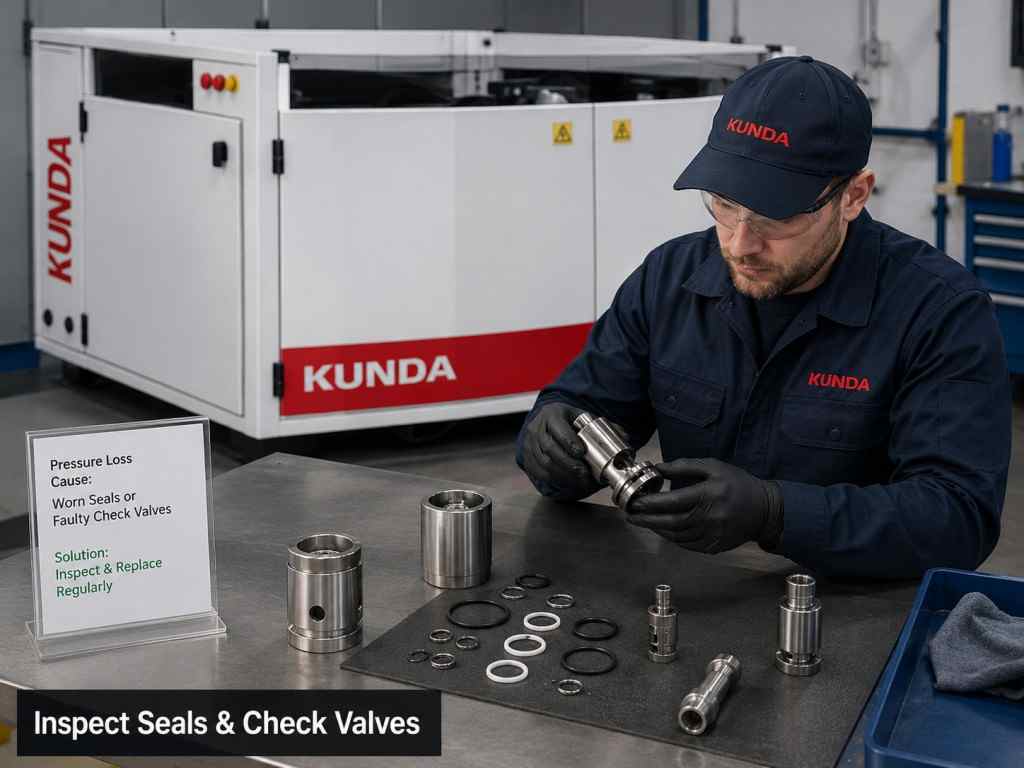
To address this issue, customers should inspect the seals for wear or damage and replace them using the appropriate seal kit when necessary.
KUNDA offers high-pressure seals and seal kits for a wide range of WaterJet Pump Systems. Customers can provide the pump model, part number, or photos of the old seals to ensure a correct match.
2. Check Valve Problems
The check valve assembly plays a critical role in waterjet pumps, controlling the direction of water flow and assisting the pump in building up proper operating pressure.
Wear, clogging, cracking, or poor sealing of the check valve can lead to a loss of pump pressure or pressure fluctuations.
Common check valve malfunctions include:
1. Backflow of water
2. Failure of pump pressure to rise
3. Rapid pressure drop
4. Unstable pump operation
5. Abnormal noise from the pump body
To address these issues, users should inspect the check valve assembly, including the valve body, valve seat, valve core, spring, and associated seals.
If the check valve assembly is found to be worn or damaged, it should be replaced promptly. KUNDA offers check valve assemblies and pump repair parts for a wide range of mainstream waterjet systems.
3. Scratched or Worn Ceramic Plungers
Ceramic plungers operate in conjunction with high-pressure seals. If the surface of the ceramic plunger develops scratches, cracks, or signs of wear, it can rapidly damage the seals and lead to a loss of pressure.
Even if the seals are replaced, a damaged ceramic plunger can cause the same issue to recur.
Before replacing the seals, customers should carefully inspect the surface of the ceramic plunger. If scratches, cracks, or significant signs of wear are detected, the plunger should be replaced.
KUNDA can assist customers in selecting the appropriate ceramic plunger based on the pump model, part number, or product photograph.
4. Accumulator Problems
Accumulators help reduce pressure pulsations in high-pressure systems. If an accumulator is damaged, improperly sized, or malfunctioning, pump pressure can become unstable.
Common symptoms of accumulator-related issues include:
1. Pressure fluctuations
2. Unstable cutting jet
3. High-pressure system vibration
4. Poor cutting consistency
5. Accelerated wear on related pump components
A properly functioning accumulator helps improve pressure stability and ensures smoother cutting performance.
KUNDA offers Waterjet Accumulators and compatible replacements for various pump systems. Customers can provide photos of the old accumulator, the pump model, pressure rating, or part number for verification and confirmation.
5. Poor Water Supply or Low Inlet Pressure
Water Jet Pumps require a stable water supply. If the inlet flow rate is insufficient, the pump may fail to build up pressure properly.
Poor water supply conditions may be caused by the following:
1. Low inlet pressure
2. Clogged water filter
3. Insufficient inlet flow rate
4. Air entering the supply line
5. Blocked supply piping
6. Poor water quality
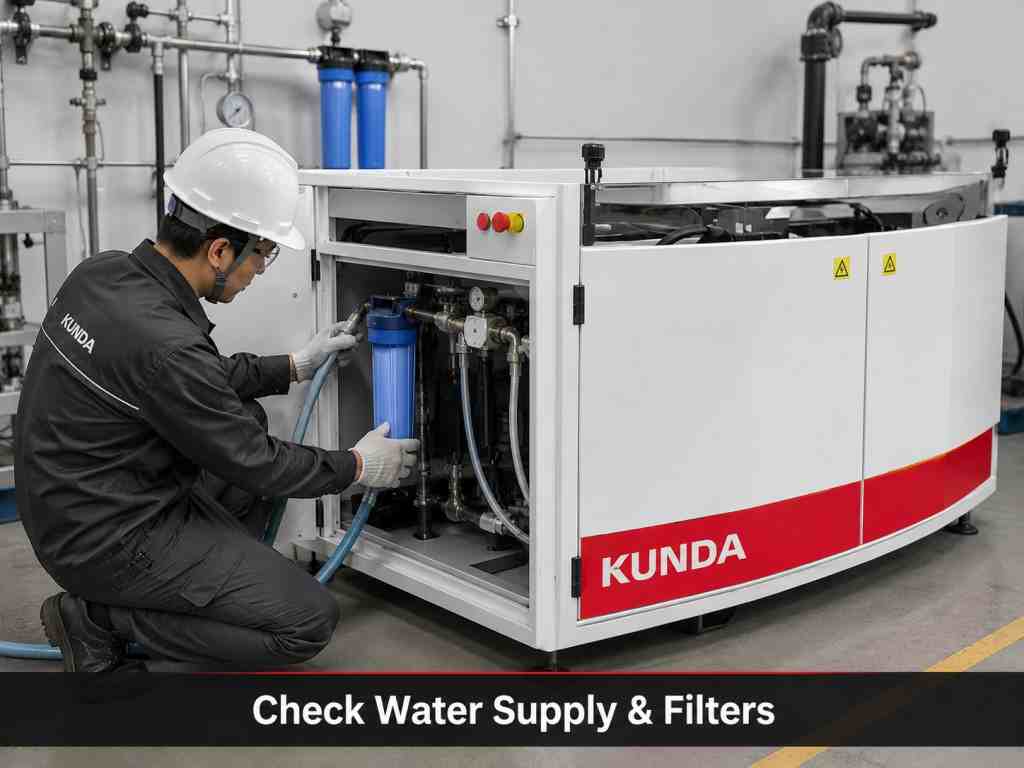
The customer should verify that the water supply system can provide an adequate amount of clean water to the pump. Filters should be cleaned or replaced regularly.
Good water quality and a stable supply help protect seals, check valves, Nozzle Orifices, and other high-pressure components.
6. Wrong Orifice and Nozzle Combination
The combination of the jewel orifice and the Focusing Tube directly affects pump pressure and cutting performance.
If the orifice size is too large relative to the pump's capabilities, the pump may fail to reach the target pressure. Severe orifice wear can destabilize the cutting jet, thereby impacting pressure performance.
Customers should check the following:
1. Jewel orifice size
2. Focusing tube size
3. Orifice wear condition
4. Pump flow rate capacity
5. Cutting pressure setting
6. Abrasive flow rate
Proper matching of the jewel orifice and the focusing tube helps maintain stable pressure, improve cutting quality, and reduce unnecessary load on the pump.
KUNDA can assist customers in selecting the appropriate jewel orifice and focusing tube based on the pump model, operating pressure, material type, and cutting thickness.
7. Hydraulic System Problems
For intensifier-style waterjet pumps, the hydraulic system is critical. If the hydraulic system malfunctions, the pump may fail to generate stable high pressure.
Common causes of hydraulic-related issues include:
1. Low hydraulic oil level
2. Excessive oil temperature
3. Hydraulic oil contamination
4. Hydraulic valve failure
5. Worn hydraulic seals
6. Poor cooling performance
7. Hydraulic pump wear
If the waterjet pump loses pressure and the hydraulic system temperature rises, the user should check the oil level, oil condition, cooling system, and hydraulic components.
Regular maintenance of the hydraulic system helps improve pump operational stability and extends the service life of components.
8. High-Pressure Leakage
External leaks in the high-pressure circuit can also result in pressure loss.
Customers should inspect the following areas:
1. High-pressure piping
2. Pipe fittings
3. Connection points
4. Cutting head connections
5. On/off valve area
6. Pump outlet area
7. Sealed connection points
Even a minor leak can reduce system pressure and create safety hazards. High-pressure leaks must be properly addressed and repaired before production resumes.
9. On/Off Valve or Cutting Head Problems
Sometimes, pressure loss is not caused solely by the pump itself; on/off valves, cutting heads, or high-pressure water lines can also affect system pressure.
A poorly sealed on/off valve can lead to high-pressure water leakage or the inability to build stable pressure.
Customers should inspect the following components:
1. On/off valve needle
2. Valve seat
3. Seals
4. Cutting head connections
5. High-pressure water lines
6. Condition of the nozzle and jewel orifice
KUNDA supplies cutting head components, on/off valve parts, jewel orifices, nozzles, and related waterjet consumables for various systems.
How to Fix Waterjet Pump Pressure Loss Step by Step
If the pressure of the water jet pump drops, the customer can inspect the system in the following order:
1. Check for any obvious water leaks.
2. Inspect the high-pressure seals and sealing assemblies.
3. Check the check valve components.
4. Inspect the ceramic plunger for scratches or wear.
5. Check the condition of the accumulator.
6. Verify the inlet water pressure and water filtration status.
7. Check the orifice (jewel nozzle) and nozzle size.
8. Check the hydraulic oil level and temperature.
9. Inspect the high-pressure lines and fittings.
10. Check the on/off valve and cutting head components.
This step-by-step inspection method helps the customer identify the root cause of the fault more quickly and avoid replacing the wrong parts.
How KUNDA Helps Customers Solve Waterjet Pump Pressure Problems
KUNDA supplies waterjet equipment, high-pressure pumps, pump assemblies, cutting head assemblies, consumables, and technical support to customers worldwide.
To address pressure-related issues with waterjet pumps, KUNDA offers the following products and services:
1. High-pressure seals
2. Seal assemblies
3. Check valve assemblies
4. Ceramic plungers
5. Waterjet Accumulators
6. High-pressure cylinders
7. Intensifier assemblies
8. Hydraulic pump assemblies
9. Nozzles (jewel nozzles)
10. Focusing tubes
11. On/off valve assemblies
12. Cutting head assemblies
13. Filters
14. Lubricants
15. Maintenance tools
KUNDA also provides compatible replacement parts for major waterjet brands, including FLOW, KMT, OMAX, AccuStream, BFT, WSI, Resato, Techni, and other systems.
If customers are unable to identify the specific component causing pressure loss, they can provide us with the following information:
1. Pump brand
2. Pump model
3. Equipment nameplate
4. Part number
5. Photos of the old part
6. Description of the pressure issue
7. Operating pressure
8. Material being cut and its thickness
Our team will assist in troubleshooting the cause and provide suitable spare parts or maintenance recommendations.
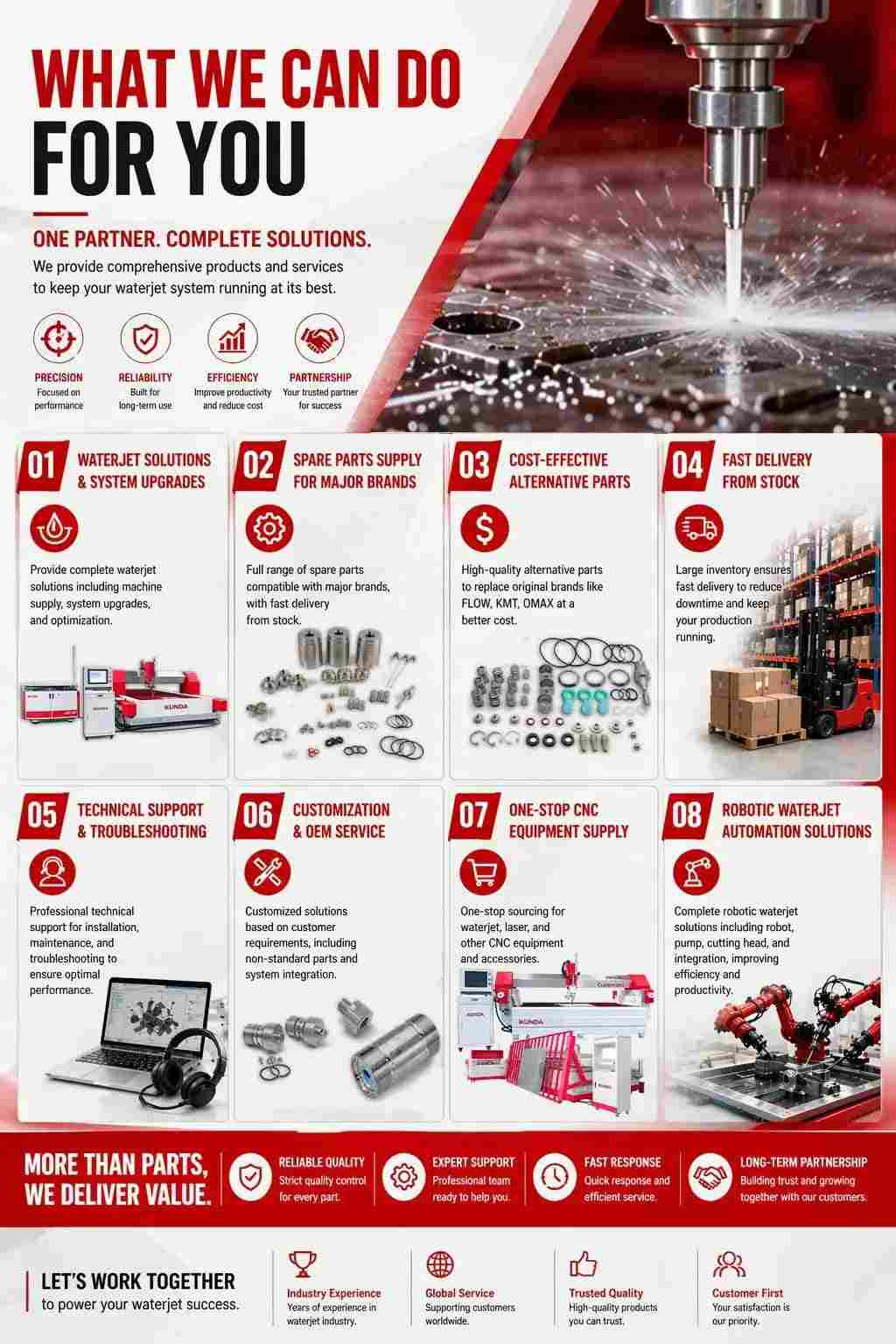
Benefits of Choosing KUNDA
When customers contact KUNDA, they receive more than just a simple price quote; they gain solutions tailored to the specific challenges of waterjet maintenance.
Customers benefit from:
1. Precise parts matching
2. Pump components compatible with major equipment brands
3. Cost-effective spare parts solutions
4. Rapid delivery support
5. Technical communication and consultation
6. One-stop waterjet spare parts supply
7. Maintenance advice addressing pressure-related issues
8. Support services to minimize downtime
For waterjet users, accurately identifying the cause of pressure loss helps save time, avoid unnecessary repairs, and reduce long-term operating costs.

Pressure loss in waterjet pumps can stem from various causes, including seal wear, check valve failure, ceramic plunger damage, accumulator issues, poor water supply conditions, mismatched nozzle orifice sizes, hydraulic system malfunctions, high-pressure leaks, or cutting head problems.
To effectively resolve the issue, users should systematically troubleshoot the entire system rather than simply increasing pressure settings or arbitrarily replacing parts.
Leveraging reliable spare part supplies and practical technical support, KUNDA helps waterjet users worldwide source the right pump components, minimize downtime, and enhance operational stability.
If your waterjet pump experiences pressure loss, please provide KUNDA with the pump model, part numbers, photos of the equipment, or a description of the fault. We will assist you in analyzing the problem and provide the appropriate spare parts.


